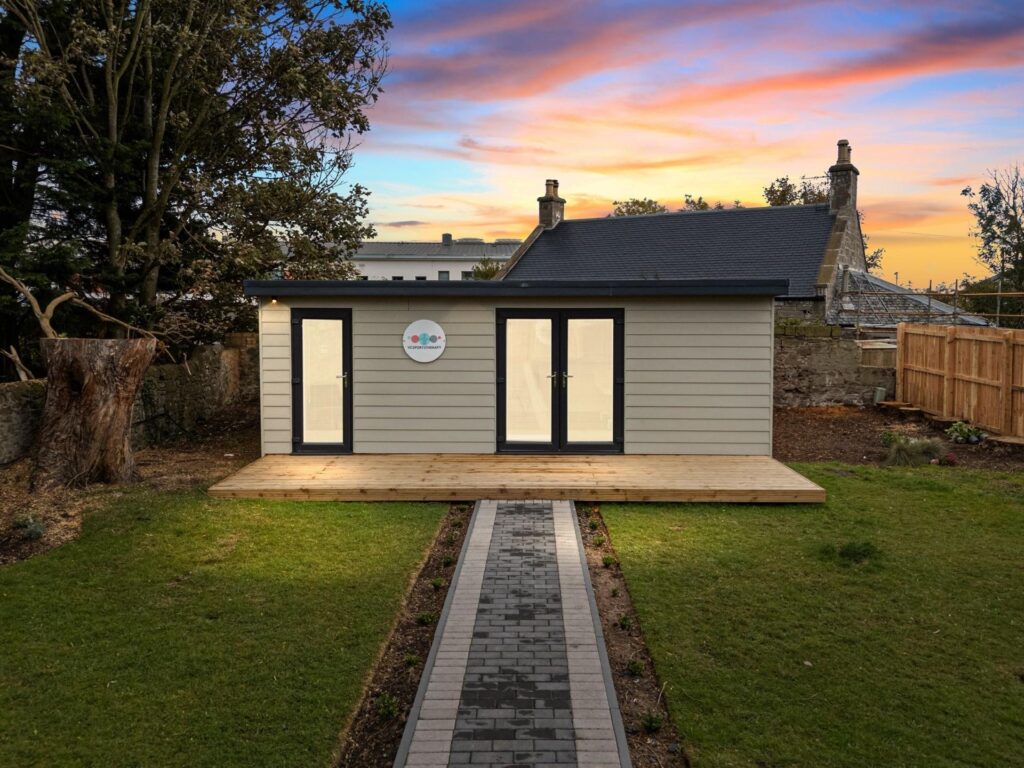
Quick answer: decking at the back of a house usually does not need planning permission if the floor is no higher than 0.5 metres above the ground and the total height is no more than 2.5 metres. Break either limit and you need to apply first.
Decking turns an awkward patch of garden into a space you will actually use. Before you buy a single board, it is worth knowing whether you need planning permission, because the rules in Scotland are specific.
When decking does not need planning permission
According to the Scottish Government’s guidance on mygov.scot, decking is permitted development if it meets all of these:
- It is at the back of the house
- The deck floor is no higher than 0.5 metres above the ground
- The total height, including any attached structure or roof, is no more than 2.5 metres above the ground
- In a conservation area or the grounds of a listed building, the footprint is no more than 4 square metres
If your plans break any one of these, you need to apply for planning permission first.

The other approvals people forget
- Building regulations. Even when planning permission is not needed, your council may ask for building regulation approval. Raised decks with steps and balustrades are the usual reason.
- Listed buildings. You need listed building consent.
- Land you do not own. You need the landowner’s permission.
Check locally
Councils interpret the detail, and some homes have had permitted development rights removed. Contact Dundee City Council, Angus Council or your own council before you commit. A short email costs nothing and can save a lot of rework.
Building it properly
A good deck starts below the boards. Solid foundations, a level frame, proper ventilation underneath and well-chosen fixings matter more than the boards themselves. Safe steps and a correctly built handrail matter once the deck is raised.
Raised or ground-level?
Low decks close to the ground are usually simple, and often fall within permitted development. Raised decks bring more rules: more height means more questions about safety barriers, privacy for neighbours and building regulations. If your garden slopes, the height is measured from the ground below the deck, so a deck that is low at the house can be much higher at the far end.
Choosing the right materials
- Treated softwood: the most affordable, and needs regular care in Scottish weather.
- Hardwood: lasts longer, costs more and ages naturally.
- Composite: low upkeep, designed to resist rot, and more expensive up front.
Thinking about the neighbours
A deck changes who can see into whose garden. Even where the rules are met, a short chat with neighbours before you start avoids awkward conversations later.
What to prepare before you ask for a quote
- A rough sketch or photos of the area
- The size and height you are aiming for
- Whether you want steps, a handrail or lighting
- Your preferred boards, and a rough budget
Frequently asked questions
Can I build decking at the front of my house without permission?
The permitted development rules cover the back of the house. Anything at the front needs checking with your council.
Do I need building regulations approval for decking?
Possibly, particularly for raised decks with steps and balustrades. Ask your council.
AFM Property Maintenance is a property maintenance and joinery business based in Dundee, serving Dundee, Angus, Fife and Perth.
Get a free quote from AFM Property Maintenance
Planning a deck? Call 07515 910 288 or contact us online for a free quote. See our services and recent projects.